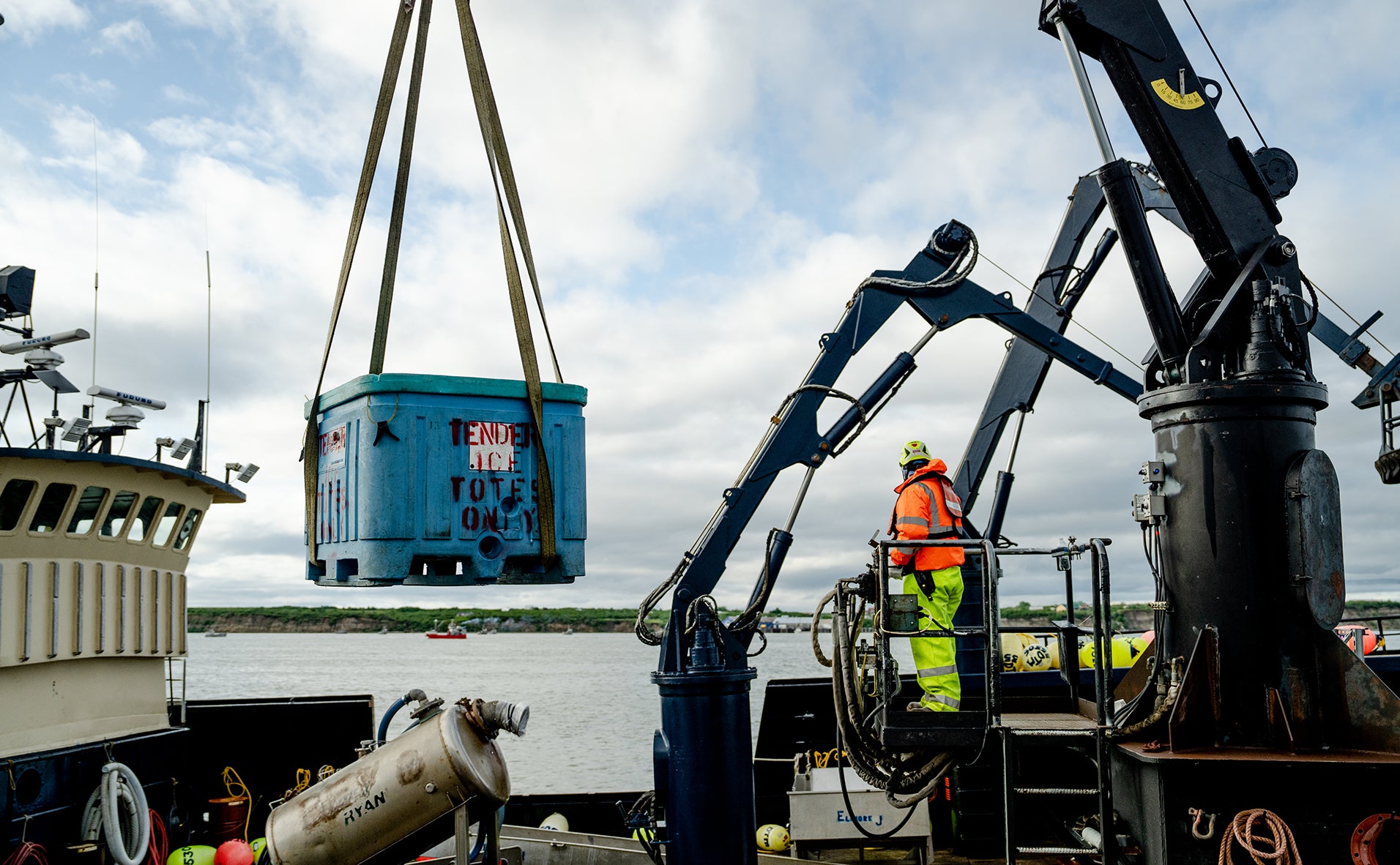
Alaska's many fisheries rely on shared infrastructure, transportation networks, processing facilities, skilled workers and coastal communities that help sustain one another. This article explains how Alaska's interconnected seafood economy supports sustainable fisheries, local jobs and coastal communities, and why changes affecting one fishery can have consequences throughout Alaska's seafood sector.
Key Takeaways
A strong seafood economy helps fund the sustainability of Alaska's fisheries, which are interdependent upon one another.
Multi-species fishing supports jobs and communities throughout Alaska. From fishermen and processors to local businesses and service providers, many Alaskans depend on the state's diverse seafood economy.
Revenue generated across Alaska's fisheries also supports the research, science and management programs that make Alaska the global gold standard for sustainable fishing.
Changes affecting one fishery can have ripple effects throughout the state's broader seafood economy.
Crab. Salmon. Pacific cod. Wild Alaska Pollock...
You're forgiven if you think of these as separate fisheries with separate seasons. After all, aside from being excellent sources of protein and brain and heart-healthy Omega-3s, what could Alaska snow crab – with its rich, sweet flavor – possibly have in common with a flakier, mild-tasting whitefish like wild Alaska pollock?
But ask just about any fisherman, processor or small business owner in coastal communities throughout Alaska, and they’ll tell you to take a closer look. That these fisheries are far more connected than first meets-the-eye.
Blake Benson, Director of Fleet for Trident Seafoods, agrees.
"I think we need to look at Alaska seafood from the perspective of interdependence," Benson said. "Because Alaska's fisheries are interconnected, and what sustains one season often supports another."
What is “Fishery Interdependence?”
Fishery interdependence means Alaska’s fisheries – and there are many of them – do not operate in isolation. The same ports, transportation networks, seafood processing plants, skilled workers and fishing families often support multiple fisheries throughout the year. Revenue generated from one fishery can help sustain infrastructure and services that benefit many others.
Consider this: Fishermen in Alaska harvest between 5.1 to 5.5 billion pounds of seafood annually. That equates to roughly 63% of the total seafood harvested in the United States, including species such as Pacific salmon, crab, cod, sablefish and wild Alaska pollock.
To Benson's point, Alaska’s seafood economy doesn’t operate one species at a time. Quite the opposite. It functions as a connected network of fisheries, processing plants, working waterfronts, transportation systems and coastal communities. It’s a place where one system relies on the other to ensure wild Alaska seafood is responsibly harvested, processed and brought to tables and families around the world.
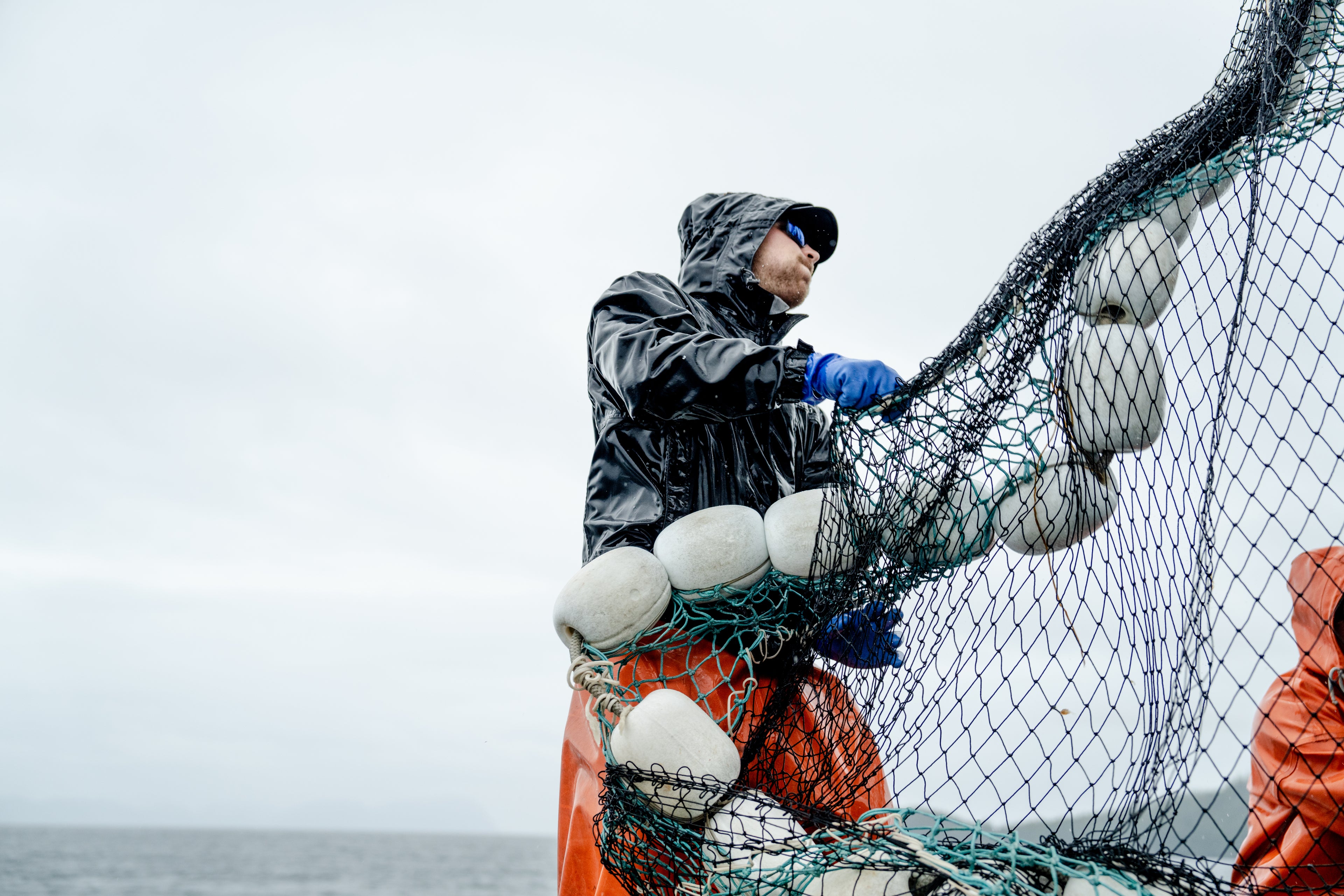
Above: An independent salmon fisherman works a fishing net in Alaska.
How Alaska’s Fisheries Support Each Other
To understand the interconnectedness of Alaska’s fisheries, a brief history lesson is required.
In 1959, sustainability was written into the state’s constitution. Literally. That’s not only unique, it’s unprecedented. Today, Alaska stands alone as the first and only state in the U.S. to mandate the responsible harvesting of its natural resources.
“Alaska is the only state in America where sustainability is part of the state’s constitution,” said Joe Bundrant, CEO of Trident Seafoods. “All natural resources must be managed for long-term sustainability.”
Investing in fisheries data and research - the very things that help ensure the long-term sustainability of all Alaska fisheries - require a stable economy and seafood sector. Enter the concept of “interdependence.”
Commercial fisheries in Alaska are connected through shared ports, seafood processing plants, transportation systems, skilled workers and coastal communities. A strong salmon season in the summer can help fishermen diversify their income, while processing facilities operating on a nearly year-round schedule – due in large part to Alaska’s wild pollock fishery – create markets for smaller-volume fisheries.
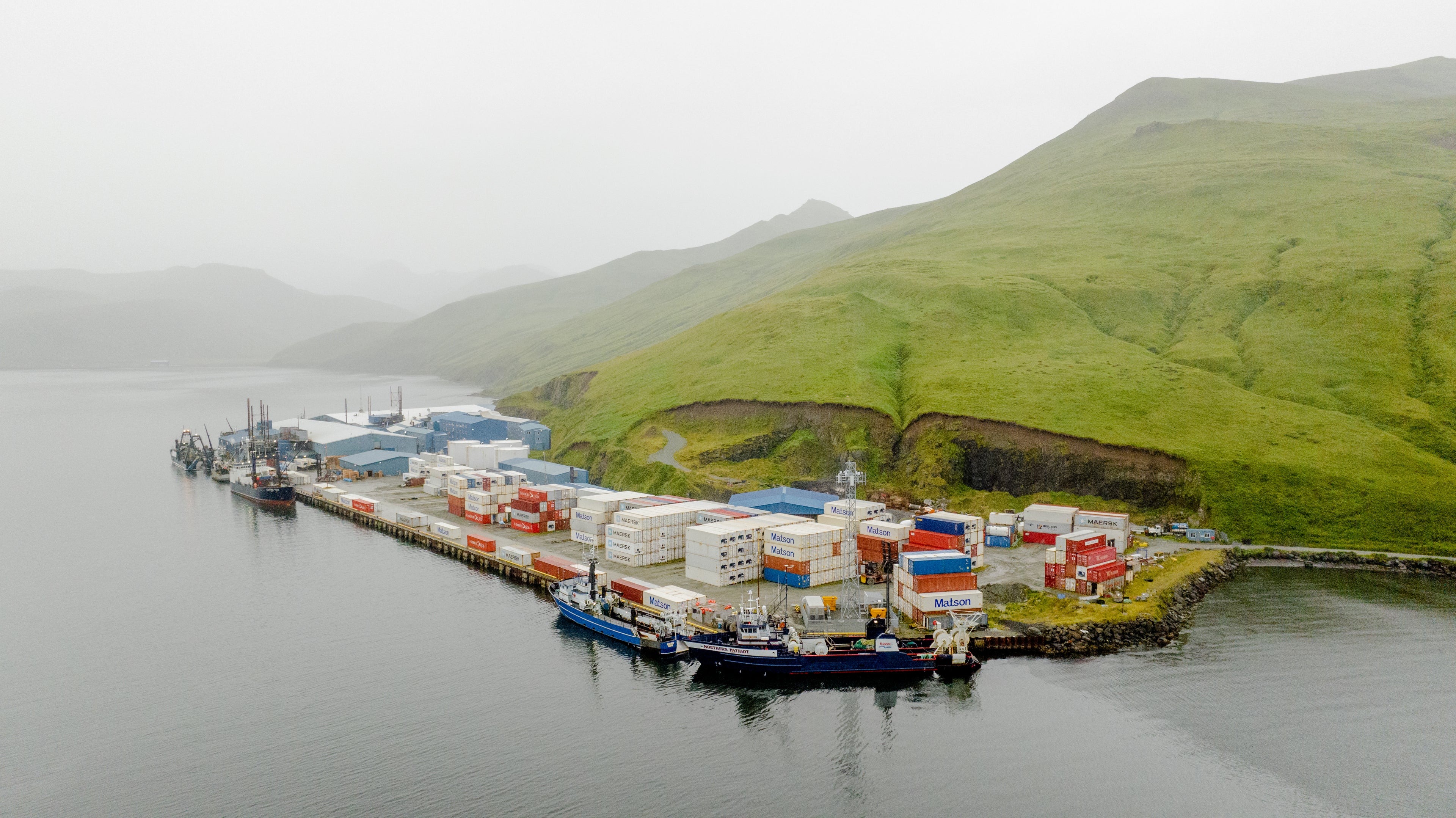
Above: Cargo containers sit in port while commercial fishing vessels offload their catch at Trident Seafoods' processing facility in Akutan, Alaska.
In practice, what sustains one fishing season or fishery often helps support another. Ports, cargo services and transportation systems exist because an entire seafood economy is working together.
“Truly the heartbeat of the supply chain for Alaska is the wild Alaska seafood industry,” added Bundrant. “Without the wild Alaska pollock fishery and the rest of the fish that comes out of Alaska, the price of every gallon of gas and every gallon of milk goes up for everyone in the state.”
This interdependence not only creates resilience for seafood companies, independent fishermen, local businesses and communities across coastal Alaska, but helps fund the scientific research and fishery management programs that ensure Alaska remains the global gold standard for responsible fisheries management.
“We put so much emphasis on good science and research in the management of these fisheries,” Benson said. “I truly believe there’s always room for improvement in these processes, but we have an excellent foundation.”
Why Multi-Species Fishing Helps Alaska Communities
Trident's business isn’t built around a single fishery.
From every species of wild Alaska salmon to crab, sablefish, cod, wild Alaska pollock and more, the company and its family of independent fishermen harvest a wide range of seafood from Alaska’s pristine, icy waters.
It’s this multi-species, multi-generational approach that helps create stable markets across fishing seasons, both by supporting Alaska fishermen who participate in different fisheries throughout the year, and by creating processing and skilled trades jobs in coastal communities throughout the state.
jpg?format=jpg&auto=webp&width=3840)
Above: Skilled trades technicians post in front of orange refrigeration tanks at Trident Seafoods' Naknek, Alaska processing plant.
“Having seafood plants is a good thing for our community,” said Katherine McGlashen, Executive Director of the Unalaska Visitors Bureau. “It really helps our community economically. As far as revenue for the city, it helps us to have paved roads and to have our electricity on. I think things are at a great point where there’s give and take.”
Alaska’s fisheries are not competing interests. They are mutually supporting parts of a larger economic and ecological system.
A Shared Responsibility: How Alaska’s Sustainable Fishing Model Supports Future Generations
At Trident, sustainability is not viewed as a short-term goal. It is a long-term responsibility.
That responsibility starts by operating within carefully managed fisheries, partnering with independent fishermen, supporting research and collaboration, and investing in the communities where we live and work.
It also means recognizing that economic success and caring for the environment are not opposing ideas but depend on each other. That philosophy holds especially true in a place like Alaska, where the future of seafood requires maintaining balance.
“One of the more unique parts of our company is our depth and breadth of products,” said Bundrant. “But the heart and soul of our business is our relationship in Alaska. The support we have from Akutan and Sand Point and Naknek and Cordova is truly, truly amazing. The support we have from those generational fishing families is truly amazing.”
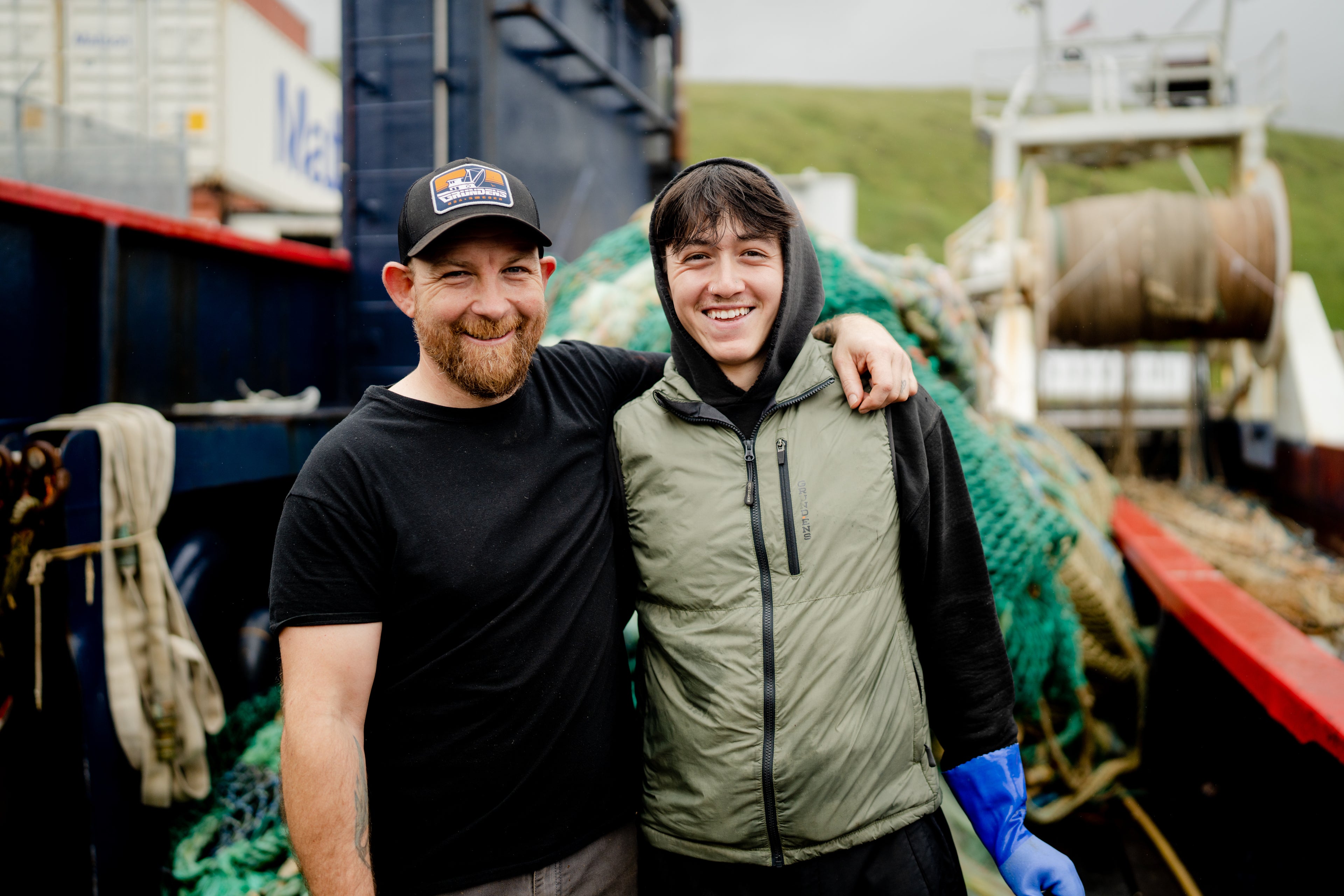
Above: Father and son duo, Derek and Emory, are all smiles after a successful trip fishing wild Alaska pollock.
Balance is what has made Alaska's fisheries a global model for responsible resource management, and it is what continues to guide Trident's work today.
“It inspires me every day to continue to work hard on behalf of this industry, on behalf of Alaska, and of course on behalf of Trident Seafoods,” Bundrant added.
The strength of Alaska’s seafood economy lies in its unique system of interdependence. Those connections between fisheries, fishermen, processors, communities and the science that guides responsible management. Understanding those connections is essential to protecting both Alaska's marine resources and the people who depend on them.
Many fisheries. Many communities. One shared responsibility.