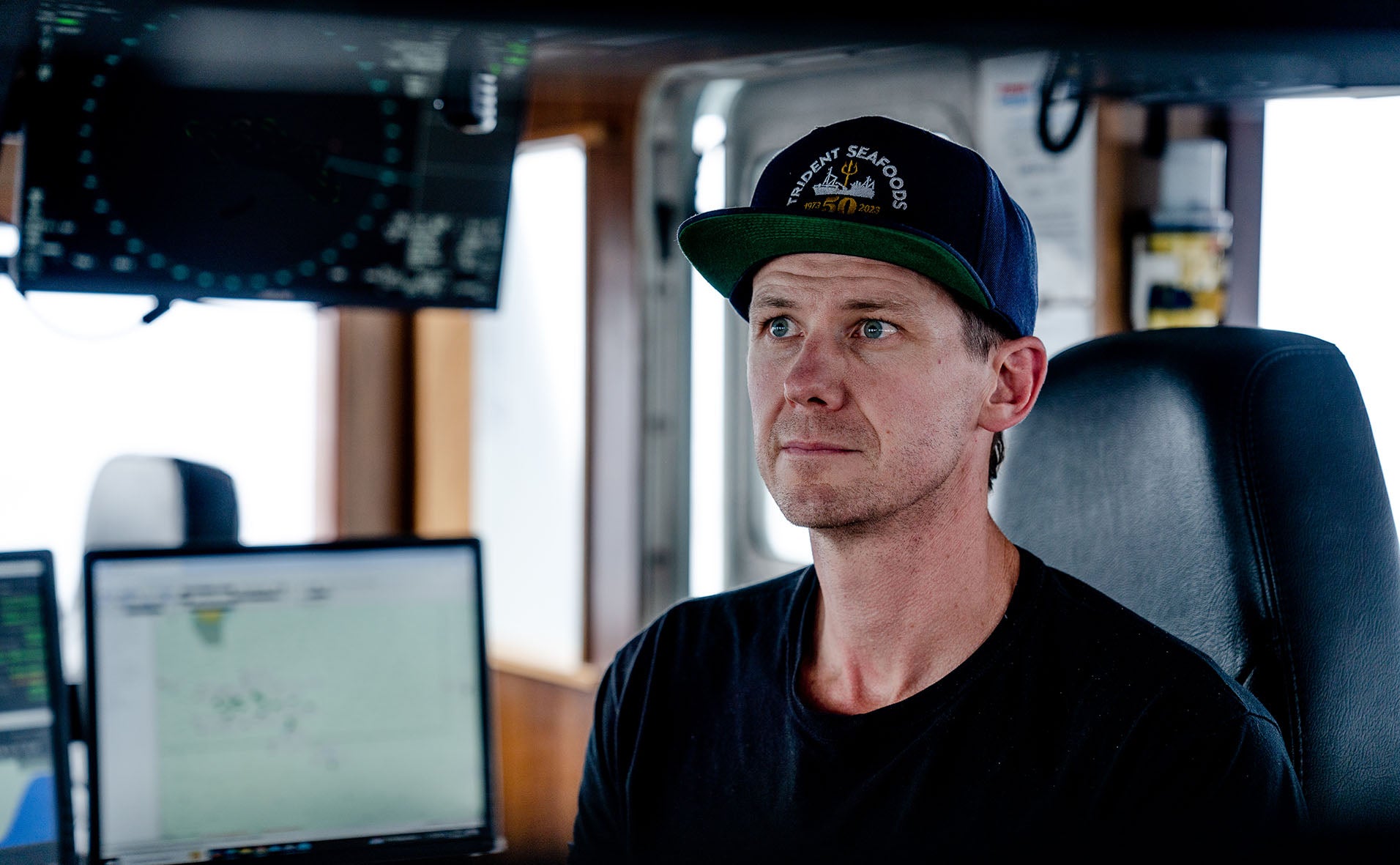
Every fishery in Alaska has a story, and few individuals are more qualified to tell that story than the captains and crew who make their living on the water.
"My View from the Wheelhouse" is a recurring series from Trident Seafoods that puts readers on the bridge of Alaska’s commercial fishing fleet. Experienced captains and crew share their perspectives, stories and practical expertise, helping readers gain a deeper understanding of the people, vessels and science behind sustainable seafood harvesting and production.
Key Takeaways:
The Bering Sea and Aleutian Islands (BSAI) pollock fishery is a pelagic trawl fishery.
Pelagic nets are designed to target pollock at different depths in the water column and are substantially different in operation and design than bottom trawl nets.
The Wild Alaska Pollock fishery operates under extensive regulatory oversight from NOAA, the North Pacific Fishery Management Council (NPFMC) and other agencies.
Recent tests show that the next generation of footrope design could lead to massive reductions in the potential for seafloor contact.
The following article was authored by Gus Molan, Captain, F/V Northern Patriot
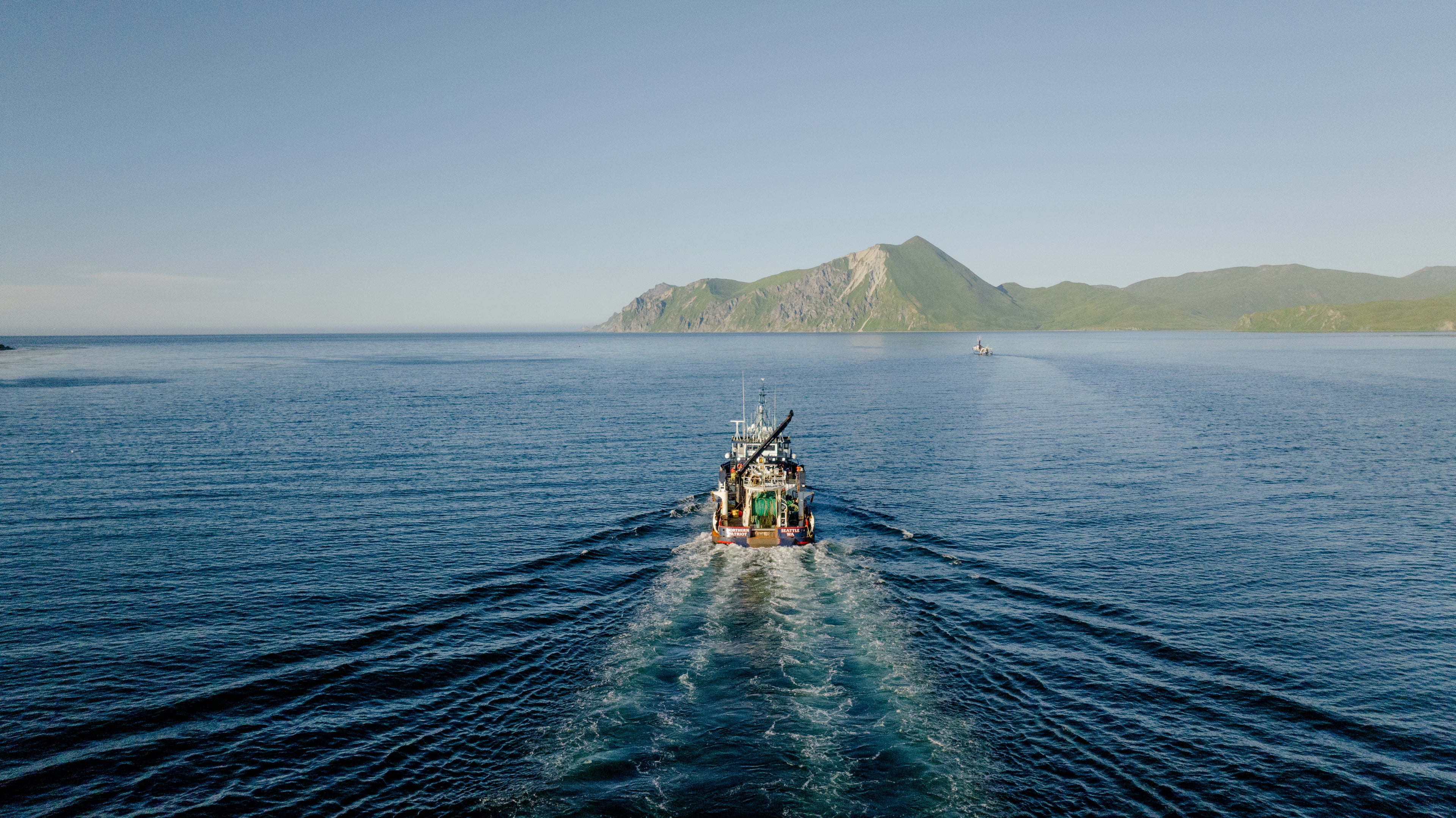
As captain of the F/V Northern Patriot and a fisherman with more than 30 years’ experience fishing Alaska’s waters, I'm incredibly fortunate to call the wheelhouse of a vessel that fishes the Bering Sea and Aleutian Islands region of Alaska my office.
Wild Alaska pollock happens to be the primary target species for the Northern Patriot, a pelagic trawl vessel that harvests in the Bering Sea and Aleutian Islands (BSAI) pollock fishery. What makes pollock harvested in Alaska so special is that it's the only type of pollock on earth that can carry the label of "Wild Alaska Pollock," and it's caught in a fishery recognized as one of the most responsible and sustainable fisheries in the world.
In my time as captain, I've found that two questions surface again and again when people learn what I do:
What's the difference between pelagic trawl and bottom trawl fishing?
How often do pelagic nets in the Alaska pollock fishery come into contact with the seafloor?
The answers are often very different from what many people assume.
Whether you came upon this article because you have questions about pelagic trawl or seek to better understand the science behind the wild Alaska pollock fishery, I think you'll see why the wild Alaska pollock fishery is recognized as one of the most heavily regulated, transparent and accountable fisheries in the world.
Who/What is NOAA Fisheries?
For the uninitiated, NOAA Fisheries is the primary federal agency in the United States responsible for managing the nation’s ocean resources and their habitat.
NOAA Fisheries, along with the North Pacific Fishery Management Council (NPFMC), Alaska Fisheries Science Center, Office of Law Enforcement, and Alaska Department of Fish and Game, use science-based management to ensure that Alaska’s wild pollock fishery is healthy and sustainable.
Is Alaska’s BSAI Pollock Fishery a Bottom Trawl or Pelagic Trawl Fishery?
Alaska’s BSAI Pollock fishery is a pelagic trawl fishery. The gear we use is defined as “pelagic” because of the way it’s fished and how it’s designed.
To be clear, seafloor contact is not the marker of whether the type of gear a trawl vessel uses is “bottom” or “pelagic.” Regardless of type of trawl or gear, federal law prohibits any fishing practice that causes permanent and adverse impacts to habitat.
As one of the most carefully managed fisheries in the world, the impacts from our gear are intensively studied and regulated. That’s an important distinction. The BSAI pollock fishery is widely considered a global gold standard for sustainable fisheries management
How Is Pelagic Trawl Gear Different from Bottom Trawl Gear?
There are several differences, from the way it’s fished to how it’s designed.
First, bottom trawl nets are designed to make continuous and uniform contact with the seafloor. Pelagic nets are designed to move up and down in the water column, depending on where the pollock are located.
A pelagic net uses what’s called a “footrope,” which in the case of a pollock net is a 2” chain that runs the length of the net to keep the net open. The footrope, along with two weights at each end of the net, is the only weight on the net. Without this weight, the “mouth” of the net would not work properly.
Unlike the footropes of some bottom-trawl nets, pelagic gear doesn’t deploy the use of tires, rollers or big chunks of rubber. This type of gear is commonly referred to as “cookie gear” in our industry, and it’s unique to bottom trawl.
Another difference is how the nets are designed aft of the footrope. On pelagic nets, regulations require larger meshes for most of the net, which allows the net to both fly through the water like a kite and exclude species other than pollock. This is why our halibut and crab bycatch numbers are slow low.
Finally, the last major difference between bottom trawl nets and pelagic nets is the size of the net. The width of pollock nets is much larger than bottom trawl nets.
To summarize: the idea that pelagic nets are built to drag the bottom of the seafloor with heavy gear is far from the truth.
What Happens When Bottom Contact is Made by a Pelagic Trawl Vessel?
There are times of the year, mostly in the summer, when daylight, feeding behavior and location push larger pollock closer to or on the seafloor. During these times of year, we fish close to the bottom and our footropes make variable contact with the seafloor.
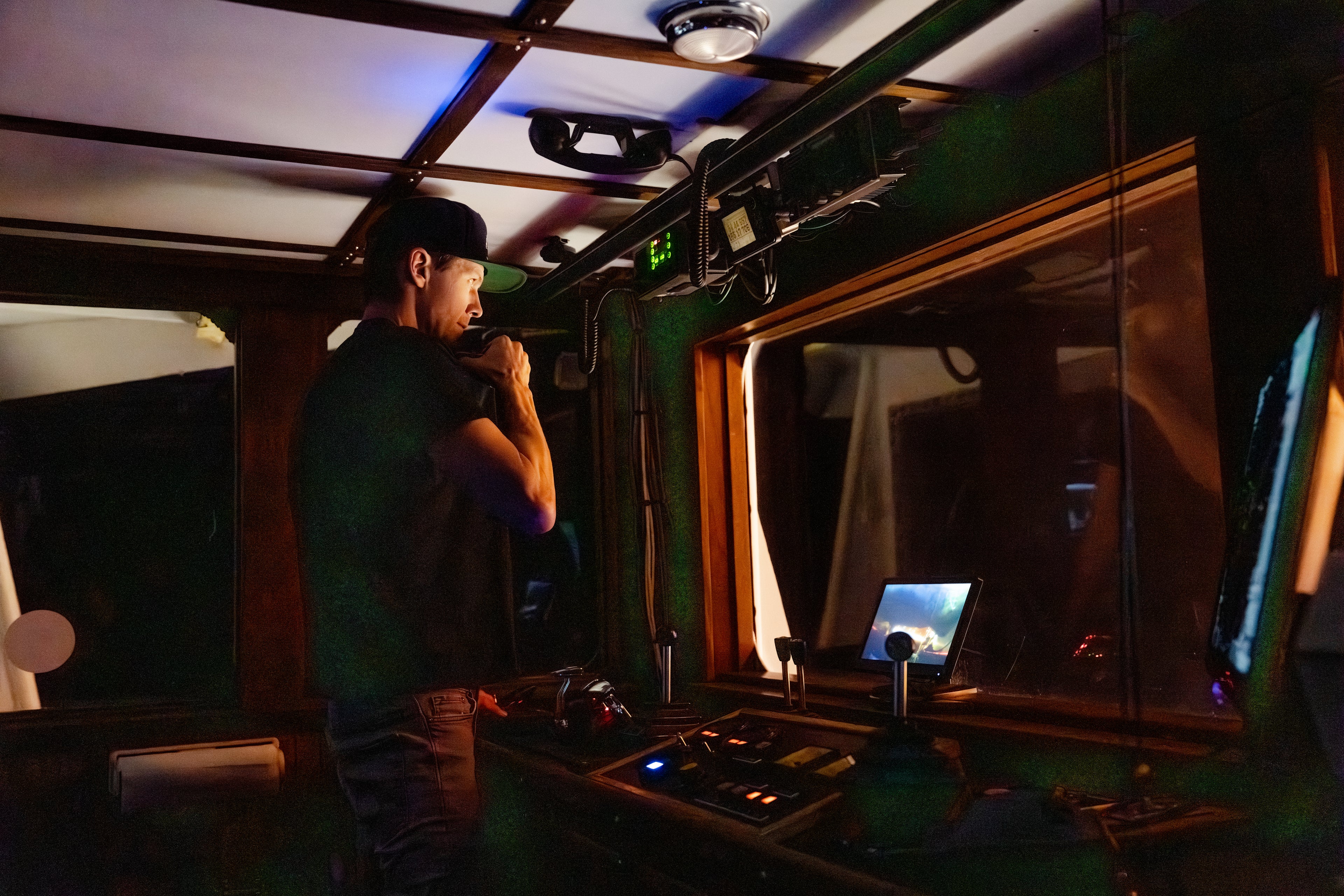
Most of the numbers thrown around don’t match the science, let alone what I experience on deck or see on the "sounder," a sonar device that uses sound waves to map the water depth beneath a vessel, monitor the seafloor and locate fish.
Pelagic trawl nets are quite fragile. Unlike bottom trawl, our nets are not built to handle tough terrain like rocks, structures and uneven ground. The few types of terrain a pelagic net can safely contact is primarily limited to flat, sandy or muddy areas. These are areas inside the Bering Sea shelf that are sandy, shallow and frequently distributed by large tides and storms.
When our nets do contact the seafloor, the portion of the gear that touches is a short section of chain on the footrope as opposed to the entire net.
Captains at the helm of vessels fishing the BSAI wild Alaska pollock fishery - myself included - do everything within their power to avoid dropping their nets onto rocks, corals or heavy structure, as doing so will destroy the net. It simply doesn’t make sense economically or operationally.
Is the Alaska Pollock Fishery Committed to Improving Gear Design and Fishing Practices?
In short, absolutely.
The gear types and fishing practices of yesterday are not the same as today, just as the gear types and fishing practices of today are not the same as they will be tomorrow. That’s due in part because companies like Trident Seafoods continue to invest in making improvements to the types of gear used in the wild Alaska pollock fishery.
Today’s footrope designs have completely changed how pelagic nets interact with the seafloor. Modern footropes have been modified and shown to reduce bottom contact compared to older design, and in an effort to lead to even greater improvements, the industry continues to adhere to the latest science-based fishing practices while making major investments in research and technology.
In late 2024, Trident Seafoods obtained approval from NOAA to test the next generation of footrope modifications. The modified designs are aimed at maintaining catch efficiency while minimizing seafloor contact. Last year, the Northern Patriot, along with three additional catcher vessels in Trident’s fleet, were equipped with the gear. The work has been incredibly promising, leading to significant reductions in the potential for both seafloor contact and unobserved crab interactions.
A Captain’s Final Take: My Priorities When Fishing
My 30-plus years of fishing and time spent as captain of a commercial fishing vessel have provided me with an opportunity to talk to and get to know the residents of coastal communities throughout Alaska.
As I’ve told the countless individuals who have approached me over the years with questions about our industry and how we fish, my top two priorities as captain of a commercial fishing vessel in the Bering Sea are as follows:
Priority number one: ensure the health and safety of my crew and that they make it home to their families after a lengthy fishing season.
Priority number two: ensure Alaska’s fish stocks and marine ecosystems remain healthy for years to come.
Healthy fisheries only happen when everyone pulls together, which is part of what makes the wild Alaska pollock fishery a global model for sustainability.
Talk like a commercial fishing insider. Get to know the following terms and acronyms from this article:
Aft: In fishing, “aft” means toward the rear or stern (back) of a vessel.
BSAI: Bering Sea Aleutian Islands, home to Alaska’s wild pollock fishery.
F/V: Short for “fishing vessel.”
NOAA: Under purview of the U.S. Department of Commerce, the National Oceanic and Atmospheric Administration (NOAA) shapes federal and international ocean, fisheries, climate, space and weather policies.
North Pacific Fishery Management Council (NPFMC): One of eight regional counsels that make federal fishery management decisions at a local level.
Pelagic trawl: Refers to the harvesting of fish that live in the open water – or midwater – column, away from the ocean seafloor. Pelagic trawl is not the same as bottom trawl.
Sounder: Also known as an “echo sounder,” a sonar device that uses sound waves to map the water depth beneath a vessel, monitor the seafloor and locate fish.
Wild Alaska Pollock: The fifth most consumed seafood in the U.S. Responsibly harvested in the clean, remote waters of the Bering Sea. Wild Alaska Pollock is a flaky, tender whitefish that’s packed with Omega-3 fatty acids and contains 20 grams of protein per 3oz. serving.